

Traditional vs Smart Smoke Detectors: EN 54 & EN 14604 Compliant Solutions for EU Businesses
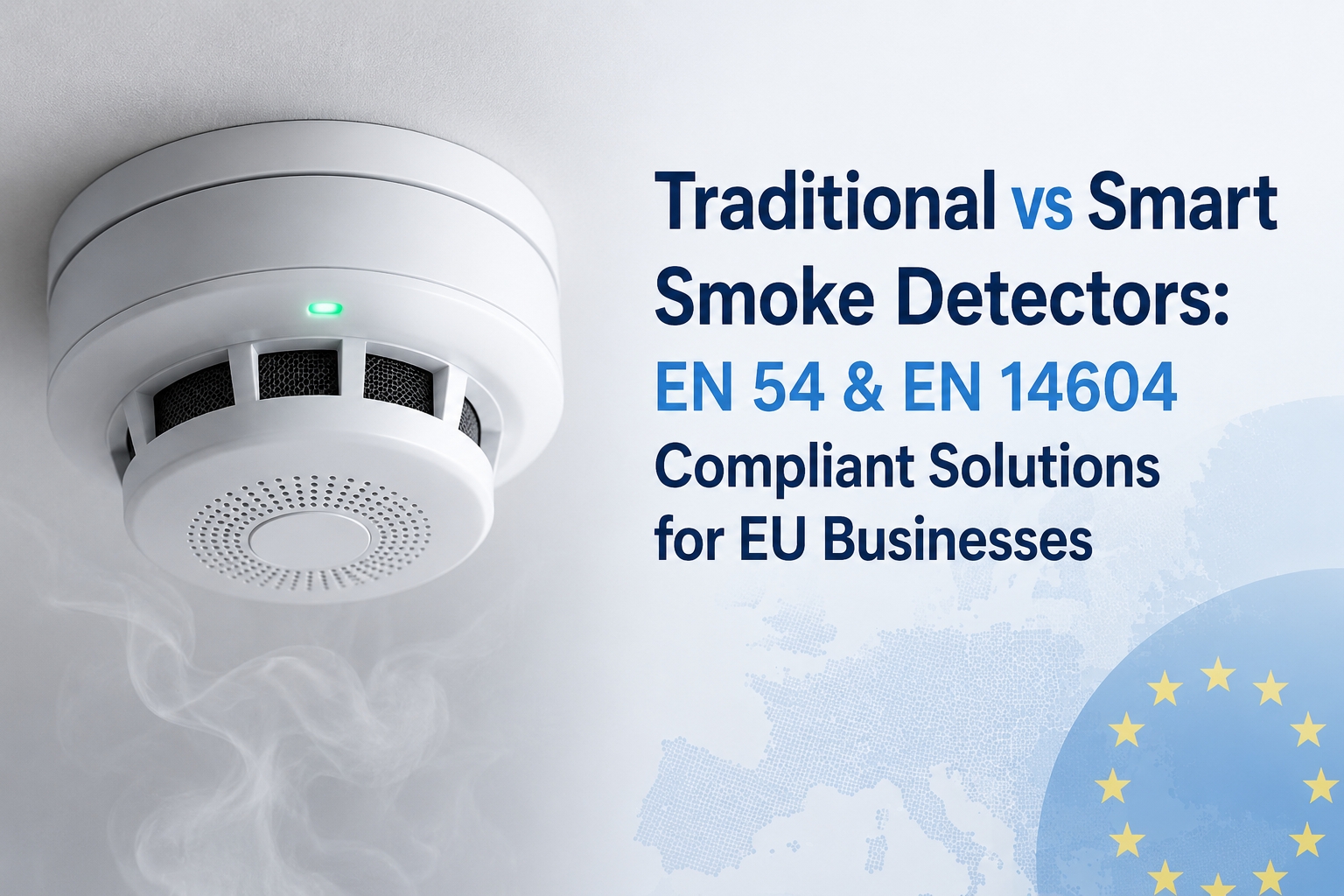
Fire safety compliance across the European Union is governed by strict and evolving standards, including EN 14604 for smoke alarms & EN 54 for fire detection systems. For modern businesses & consumers operating in regulated environments—manufacturing, warehousing, commercial real estate, or multi-site operations—choosing between traditional smoke detectors and smart smoke detection is no longer just a technical decision. It is a strategic one that directly impacts compliance, liability, and operational continuity.
Traditional Smoke Detectors in the Europe
Traditional smoke detectors hold a significant share across EU member states, particularly in smaller commercial premises and low-risk environments. Devices compliant with EN 14604 are generally accepted for basic fire detection needs, when standalone systems are permitted.
These detectors provide:
- Localized smoke detection with audible warning
- Lower initial costs
- Simple installation with minimal infrastructure
Nonetheless, for commercial setup, EU regulatory environment focuses on system-level accountability and traceability. Standalone detectors present several compliance challenges:
- No centralized monitoring as per EN 54 system frameworks
- Manual inspection and maintenance records, increasing audit risk
- Limited integration with fire suppression or evacuation systems
For businesses subject to insurance requirement, health & safety directives, or multi-site compliance, these limitations can become liabilities.
EN 54 Smoke Detectors for Fire Alarm Systems
Fire alarm systems are designed to meet the more advanced requirements outlined in EN 54, which governs fire detection and alarm systems across the EU. These systems integrate multiple components—detectors, control panels, notification devices—into a unified, monitored network.
A compliant EN 54 system typically includes:
- Addressable detectors that identify exact fire locations
- Integrated alarm signaling and evacuation controls
- Central control panels for system-wide monitoring
- Fire suppression and building evacuation systems compatibility
However, modern smart smoke detectors can extend these capabilities further through IoT connectivity and cloud-based monitoring, allowing for standalone or system operations.
Key advantages include:
- Remote diagnosis and regular maintenance
- Real-time alerts to building managers for emergency response
- Building management systems (BMS) integration
- Automated logging for inspections and fault events
- Scalable across multiple sites
For example, a warehouse distribution center in Germany using an EN-compliant smart & wireless smoke detector can detect a fire in a specific aisle, trigger localized alarms wirelessly, notify remote safety managers, and log the entire incident for compliance reporting.
Compliance and Liability in the EU
EU directives such as the Workplace Directive (89/391/EEC) and national fire safety regulations require employers to ensure effective fire detection, warning systems, and maintenance procedures.
Smart fire alarm systems support compliance by:
- Providing auditable digital records aligned with EN requirements
- Enabling faster response times to reduce damage and liability
- Supporting insurance requests for risk mitigation
- Reducing human error in inspections caused by fatigue
In contrast, relying solely on traditional detectors may expose businesses to gaps in compliance requirement.
Cost vs Long-Term Value
While EN 14604 & EN 54 smoke detectors offer a simple & low-cost entry point, they often result in higher operational risk and burden over time.
For complex settings, smart smoke detection systems require higher initial investment but deliver measurable returns over extended period:
- More cost savings over longer time horizon
- Reduced insurance premiums in EU markets
- Improved operational resilience and business continuity
- Streamlined maintenance through automation
For businesses managing multiple facilities across the EU, smart fire detection platform also simplifies compliance across jurisdictions.
Which Solution Fits Your Business?
EU businesses should assess fire safety solutions based on:
- Whether EN 54 system or EN 14604 compliance are required
- Facility size, occupancy, and risk classification
- Need for centralized oversight or multi-site integration
- Building or heritage sites with drilling & wiring considerations
- Internal capability for manual vs automated compliance tracking
If your current fire safety setup relies on standalone smoke detectors or system, it may meet basic requirements—but not modern solutions for adaptability, compliance, and risk management.
To evaluate the right solution for your business, consider having a professional fire risk assessment aligned with EU standards. This will identify compliance gaps, system requirements, and opportunities for optimization.
For any EN 54 / EN 14604 smoke detector inquiry or customized project, please contact one of our product specialists for more information.

TEL: 886-2-2708-5151 FAX: 886-2-2703-5588 Email: info@keysecurity.com.tw